





Former Hartbeat President Bryan Smiley Launches Hard Carry Media for Gen Z Men
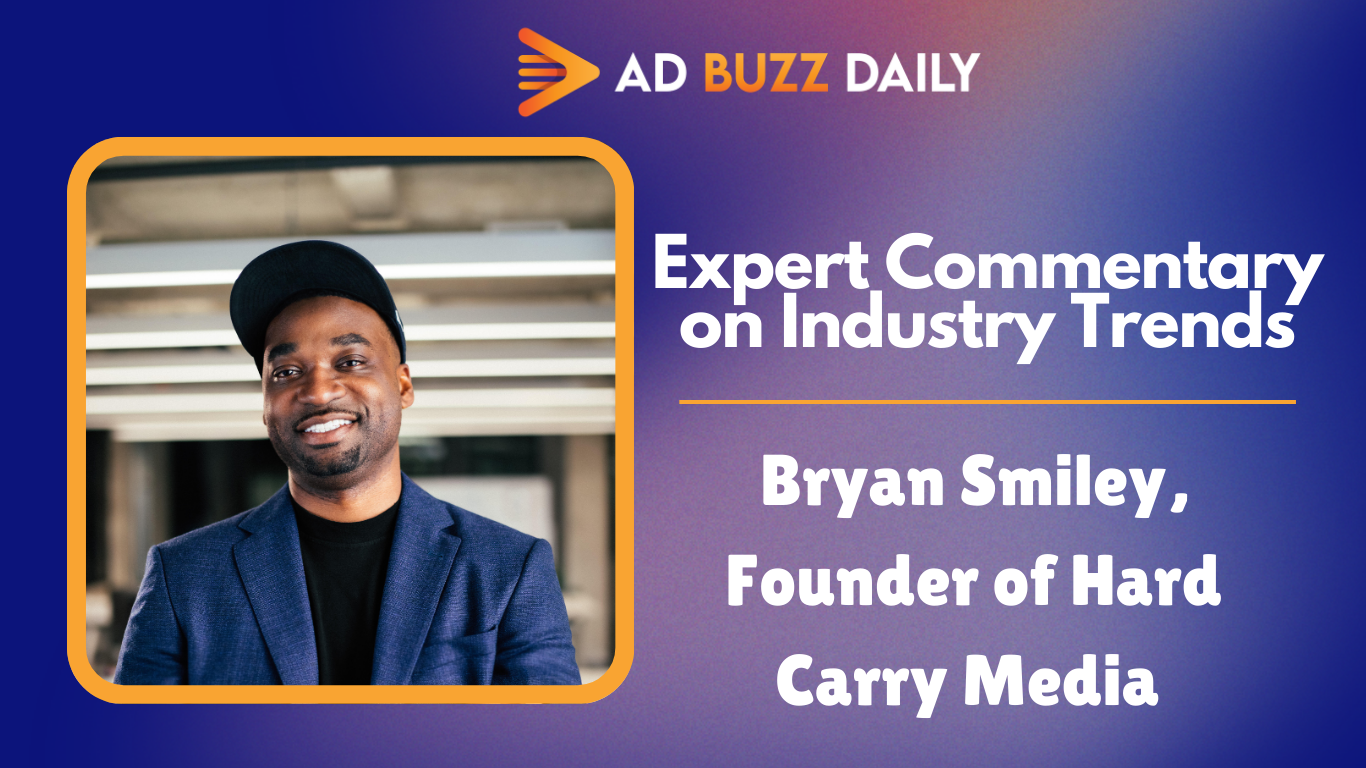
Bryan Smiley spent years inside Hollywood’s traditional studio system helping develop films and television shows. Now he’s betting the next generation of male-focused media will be built somewhere else entirely: the creator economy.
The former president and chief content officer of Hartbeat, the entertainment company founded by Kevin Hart, has launched Hard Carry Media, a new studio focused on building multi-platform brands and intellectual property aimed at Gen Z men.
The company plans to develop and acquire digital-first brands that begin on social platforms before expanding into streaming, FAST channels, podcasts, live events and consumer products.
Smiley told AdBuzzDaily the idea grew out of watching how creators increasingly bypass traditional media gatekeepers to build massive audiences online.
“I grew up in traditional Hollywood and I love movies and TV,” Smiley said. “But there’s been a massive shift where creators with an engaged community can build a real brand without relying on the old distribution system.”
Hard Carry Media will operate less like a traditional studio and more like a partnership with creators, he said. Rather than dictating programming, the company plans to provide production resources, distribution strategy and business infrastructure while allowing creators to shape the voice and direction of their projects.
“We believe creators know how to talk to their peers better than anybody else,” Smiley said. “Our role is to give them the tools and infrastructure to do it at the highest level.”
Speed is another major difference from Hollywood’s development cycle. Film and television projects can take years to move from concept to release, while social-first production cycles move dramatically faster.
“At Hard Carry Media we can ideate a big idea on a Monday and start shooting that same week,” Smiley said. “Then you immediately hear from the audience and adjust.”
The Gen Z male opportunity
Smiley argues that Gen Z men represent a particularly underdeveloped market for brands and media companies. Their media habits differ sharply from previous generations. Platforms such as YouTube, TikTok and Twitch increasingly function as the primary entertainment destination for young audiences, often replacing traditional television.
Yet advertisers and media companies have struggled to consistently reach them. Industry research from The Creative Effectiveness Program has found that while Gen Z characters frequently appear in advertising, many campaigns fail to resonate authentically with the audience. Smiley noted that youth-focused marketing often defaults to familiar casting choices and aesthetics, with white male imagery still dominating many campaigns aimed at young consumers.
The disconnect has created an opportunity for creator-led brands that build communities first and expand into broader media businesses later. For Smiley, the strategy is rooted in listening directly to audiences rather than trying to predict trends from the top down.
“You can learn a lot from how a community reacts in real time,” he said. “If you’re paying attention to comments and engagement, they tell you exactly what they want.”
Building franchises from creators
Hard Carry Media’s early strategy will focus on high-energy formats and franchises designed to grow on social platforms before expanding into larger entertainment properties.
The company also plans to use artificial intelligence primarily as an operational tool rather than a creative replacement, Smiley said. AI helps analyze large datasets from digital platforms and audience engagement, but storytelling decisions remain with creators and creative teams.
“I think AI is incredibly useful when it comes to efficiency and analyzing data,” he said. “But the nuance creators bring to their content can’t be replicated.”
For Smiley, the goal is to combine Hollywood-scale production with the speed and authenticity of creator culture.
“This generation is incredibly engaged,” he said. “But you have to meet them where they already are. If you build the community first, everything else can grow from there.”
