
Q&A: Spotter’s Nic Paul on Creators as Global Media Giants
Hollywood is waking up to a new box office formula: creators and their built-in audiences.
What once felt like a gamble is now an evolution in how success is defined on the big screen. Influencers like MrBeast, Salish Matter, and Smosh joining the cast of Paramount’s Angry Birds 3 show that studios, networks, and brands are finally betting on creators to bring their millions of fans with them.
From viral clips to feature films, creators are turning fan engagement into measurable impact by fueling hype through Discord groups, mailing lists, live Q&As, behind the scenes content, and cross promotions with fellow creators. The days of traditional gatekeepers are slipping away as platforms and digital talent deliver direct connections and transmedia experiences audiences actually want.
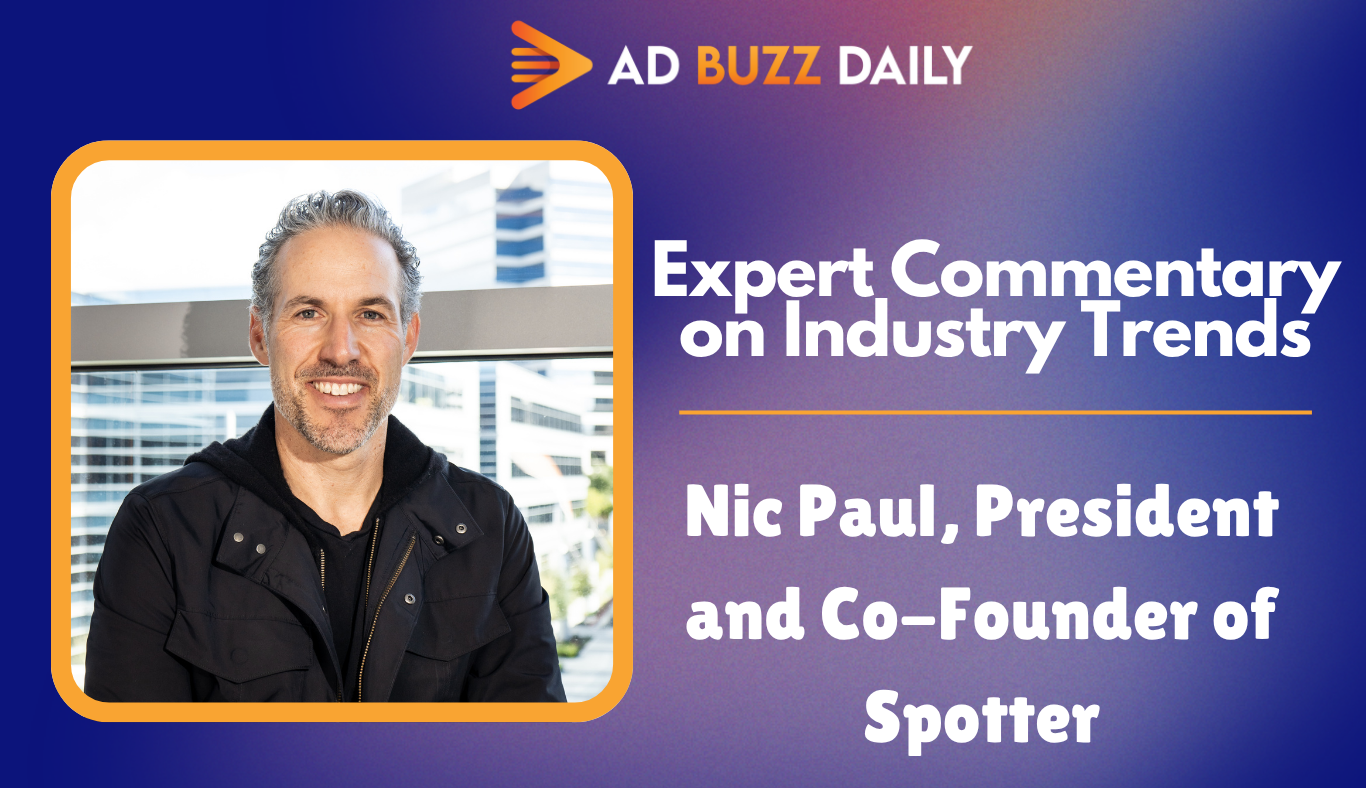
To understand how this is changing the industry, AdBuzzDaily spoke with Nic Paul, president and co-founder of Spotter, about the power of creators to move audiences from online to on-screen.
This interview has been edited for length and clarity.
How has Spotter’s role in providing capital, advertising, and partnerships for creators like MrBeast, Dude Perfect, and Ryan Trahan while also facilitating deals such as MrBeast’s introduction to Amazon reshaped opportunities for creator-led commerce and content?
We’ve done more than just give creators capital, though that’s been critical in allowing them to expand their teams, invest in production resources, and build their own studios. What has really reshaped the landscape is how we’ve educated the advertising market on the true scale, excellence, professionalism and consistency of these creators. We’ve shown brands and buyers that creators like MrBeast, Dude Perfect, and Ryan Trahan aren’t just influencers, they are today’s TV networks, consistently releasing weekly or bi-weekly hits that rival, and often outperform, broadcast and cable ratings.
Because of that proof, we’ve been able to connect creators to major advertisers and even global streamers. Deals like introducing MrBeast to Amazon highlight how creator-led IP can sit alongside Hollywood productions as must-see content, while also reaching younger audiences at scale. This has unlocked new opportunities in creator-led commerce as well where a creator’s authenticity, consistency, and reach give brands a direct line to consumers that feels both premium and personal.
In short, our role has been to provide the capital and confidence creators need to grow, while giving the market the data and proof it needs to value them as the next generation of global media and commerce leaders.
How are film studios leveraging creators’ built-in audiences to influence box office success?
Honestly, it’s gone beyond just film studios, every major entertainment company is paying attention. But for studios in particular, the realization has been that when they tap into the largest creators, they’re not just buying impressions – they’re unlocking earned media at scale.
When a creator integrates a film into their content, they bring it into a world that their audience is already deeply engaged in. That gives the film cultural relevance and authenticity that traditional advertising alone can’t replicate. The creator doesn’t just run a promo; they leverage their massive audiences on YouTube, TikTok, and Instagram to generate excitement, conversation, and shareable moments that drive people into theaters.
Whether it’s major sports leagues or film studios, the more creators are integrated into the show, the movie, the event beyond its pure promotion, the more success materializes.
In what ways have viral clips and short-form content paved the way for creators to transition into feature films?
Our focus is on long-form creators, but we’re watching how short-form creators with rabid fanbases are increasingly crossing over into other entertainment mediums. Short-form is like a testing ground, it allows creators to build massive awareness, demonstrate cultural relevance, and prove they can capture attention in an instant.
What that does is create a direct-to-audience relationship that studios and streamers value. If a creator can command tens of millions of views on 30-second clips, it signals they can bring a built-in audience to bigger projects. We’ve started to see those short-form stars leverage their influence to launch music careers, headline live events, and yes, even make the jump into feature films.
It’s really a progression: short-form is the spark, but it’s the creator’s ability to sustain an engaged fanbase and tell bigger stories that gives them a path into long-form storytelling like TV and film.
How are creators redefining traditional success metrics by mobilizing audiences across platforms like Discord, mailing lists, and live Q&As?
Creators are redefining what success looks like because their relationship with their audience goes far beyond views or likes. They’re mobilizing communities across Discord, mailing lists, live Q&As, and increasingly, real-world events.
We’re seeing creators prove their loyalty and cultural impact in ways traditional media rarely can. Take Salish Matter, when she launched her skincare brand, 87,000 fans showed up at a mall in New Jersey. That’s not just a launch, that’s a movement. Or Dude Perfect, who continue to sell out their 20+ city tours year after year. Those kinds of numbers show that creators aren’t just digital entertainers. They’re building fandoms with the same intensity as sports teams or music artists.
These new success metrics; turnout, engagement across multiple platforms and fan conversions into real-world actions are why brands and studios now see creators as some of the most powerful partners in the entertainment and commerce ecosystem.
What role does fan-led promotion, such as word-of-mouth and grassroots hype, play in shaping a film’s pre-launch momentum?
Studios have always chased earned media, but what’s different now is the scale and speed. Fan-led promotion today isn’t just word-of-mouth, its creators sparking grassroots hype that can reach tens of millions overnight. That kind of organic momentum gives a film cultural relevance before opening weekend, and it’s become a critical part of how studios build pre-launch buzz.
With the decline of traditional entertainment gatekeepers, how are creators and platforms meeting the demand for more direct audience connection and transmedia storytelling?
What’s changed is speed and frequency. Traditional entertainment can take a year or more to shoot, edit, and release a series. But creators are meeting audience demand by uploading weekly, sometimes even daily, shows that feel just as premium, yet are far more immediate. Platforms like YouTube enable that direct connection, and because [creators control the narrative, they’re also able to extend stories] across formats. This ranges from long-form episodes to shorts, live streams, and even in-person events. That’s transmedia storytelling happening in real time, and it’s why creators are filling the gap left by traditional Hollywood.
What new monetization opportunities exist for creators and studios when tapping into creator-led communities and cross-promotional ecosystems?
For creators, the big shift is that monetization now comes from more than just ads. They’re weaving brand sponsorships and integrations directly into their storytelling, which makes the brand part of the narrative and carries the creator’s stamp of approval. At the same time, creators are launching and selling products, whether their own or through partnerships, to audiences that already trust them.
For studios and brands, tapping into these creator-led communities means access to cross-promotional ecosystems where a campaign isn’t just an ad buy as it can extend into content, commerce, live events, and fan engagement. That layered approach creates revenue opportunities on both sides, and it’s redefining what ‘monetization’ looks like in entertainment.
